
Ines Krause · 18 October 2026
Patterns in Cross-Platform Content Syndication for Independent Regional Journalists
Independent regional journalists distribute their reporting across social networks, news aggregators, email newsletters, and emerging decentralized platforms, and this practice has produced measurable patterns in how local stories travel beyond their original outlets. Data from multiple studies indicate that these professionals often begin with primary publication on their own sites before pushing excerpts or full pieces to third-party channels, while they track engagement metrics to refine timing and format choices. By October 2026, platform algorithms had shifted enough that many outlets reported higher referral traffic from short-form video clips compared with static text posts, and this change altered daily workflows for staff at smaller publications.
Core Distribution Channels and Observed Sequences
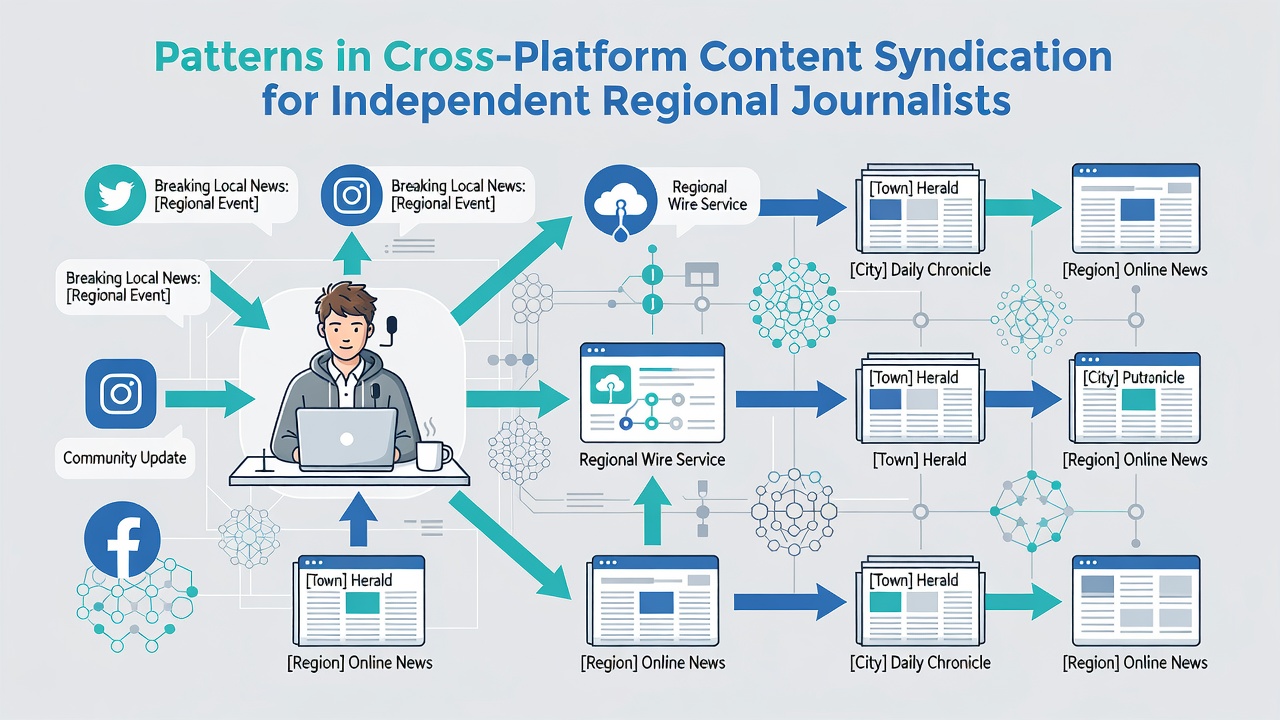
Researchers tracking content flows have documented a consistent sequence where a regional story first appears on a local website, then moves to Facebook and X within the first hour, followed by Instagram or TikTok adaptations later the same day. Observers note that journalists at independent outlets frequently repurpose quotes or data visualizations into carousel posts or short reels, and these adaptations generate secondary views that feed back to teh original article through link previews. Studies from university media labs show that outlets using this staggered approach retain more referral traffic than those posting identical copy everywhere at once.
Those who have examined syndication logs find that regional journalists also route material through Google News and Apple News feeds, where headline optimization plays a larger role than on social platforms. One analysis of several dozen independent newsrooms revealed that stories optimized for aggregator headlines received up to 40 percent more impressions within the first 48 hours, while the same pieces performed differently when shared directly on messaging apps such as WhatsApp or Telegram. The pattern suggests that platform-specific tailoring occurs early in the production cycle rather than as an afterthought.
Geographic and Audience Segmentation Trends
Evidence from audience measurement tools indicates that cross-platform syndication allows regional journalists to segment readers by geography and interest without additional reporting resources. Data shows that stories about municipal policy changes tend to perform strongly within state or provincial boundaries on local Facebook groups, whereas national angles from the same reporting reach wider audiences through X threads or newsletter summaries. In October 2026, several independent outlets reported measurable lifts in international traffic after embedding localized stories into broader regional roundups shared on LinkedIn.
Academic reviews of syndication behavior further reveal that journalists in rural or mid-sized markets rely more heavily on closed messaging groups and community forums than their urban counterparts, and these channels often produce higher conversion rates to subscriptions. Patterns identified in Canadian and Australian newsroom surveys point to similar reliance on platform-native tools for audience retention, with variations tied to language and regulatory environments rather than technology alone.
Measurement Practices and Platform Policy Responses
Independent outlets now integrate analytics from multiple sources into single dashboards, and this integration lets journalists compare performance across platforms without switching between separate tools. Figures from recent industry reports indicate that teams monitoring referral sources weekly adjust their posting schedules more frequently than those checking metrics monthly. According to a Pew Research Center study, smaller newsrooms that adopted unified analytics saw steadier growth in direct site visits over a twelve-month period.
Platform policy updates continue to influence these practices, and regional journalists respond by maintaining parallel distribution lists rather than depending on any single network. Evidence collected from newsroom case studies shows that when one platform reduces reach for news content, outlets shift emphasis to email lists or alternative networks within days. This adaptability appears in usage data from both North American and European independent publishers, where diversification of channels correlates with more stable monthly audience numbers.
Emerging Formats and Technical Adaptations
Journalists have expanded syndication to include structured data markup, audio snippets, and interactive maps that travel across platforms more effectively than plain text. Research indicates that outlets embedding schema markup see improved visibility in search results that then feed into aggregator feeds, creating an additional layer of distribution. Those who have reviewed technical logs note that short audio clips posted to podcast directories often link back to full written versions, extending the lifespan of regional reporting beyond the initial news cycle.
Patterns in format experimentation also appear when independent teams test native video on newer platforms while keeping longer versions on their own sites. Data collected through October 2026 shows that outlets producing both short and extended cuts maintain higher overall engagement rates than those using only one length. The approach aligns with audience behavior tracked across devices, where mobile users favor quick clips and desktop readers spend more time with full articles.
Conclusion
Cross-platform content syndication among independent regional journalists follows identifiable sequences of publication, adaptation, and measurement that continue to evolve with platform policies and audience habits. Studies and usage data document consistent reliance on staggered timing, format tailoring, and multi-source analytics, while geographic differences shape which channels receive priority. These documented patterns provide a factual basis for understanding how local reporting reaches broader audiences without requiring subjective evaluation of effectiveness.